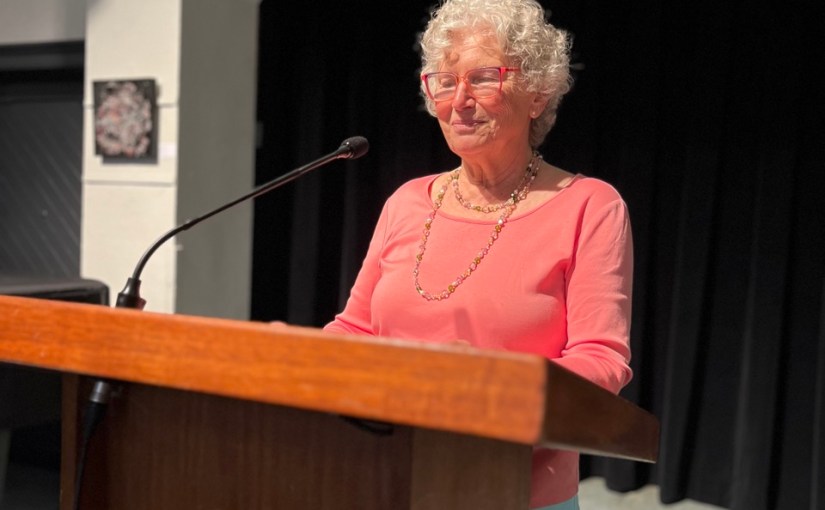
My Author Talk follows the format that the Heliconian Club in Toronto asks all invited writers to give. That is: tell the audience of readers what inspired you to write the novel and what research you did. This has proven very successful as readers are interested in the story behind the story. My novel, The Age of Privilege, has themes that appeal to those of us born just before or after the Second World War, an era I call The Age of Privilege because we benefited from a time of peace. The themes in the novel still ring true today: women’s place in the home and at work, family bonds, the environment and our health. I’ll be giving my talk again in the new year at the Unionville branch of the Markham Public Library and welcome more opportunities to share my story with libraries and book clubs.
Author: dmwauthor
amateur dancer with Margaret Morris Method
The Age of Privilege
Set during the last decades at the end of the twentieth century, a time when post-war baby boomers flourished, the story centers around Dawn Wright, a woman who is free to take advantage of all that period has to offer: education, liberation, prosperity. Born and raised in Cobourg she moves to Toronto to attend university. Enter Paul Lewis who captures her heart. While marriage to him brings happiness and everlasting love, Dawn has a rival, and her concurrent story adds suspense. Still, Dawn is successful and prosperous when she breaks the glass ceiling.
Travel
What is it about travel that inspires the muse? Is it simply being in a country away from the familiar? Or is it seeing the familiar with different eyes?
Goethe said that the highest goal humans can achieve is amazement. Can travel achieve this? Why limit oneself to a singular experience or repeat the familiar without cultivating others? Why settle with simply being a tourist?
Nowadays travellers often go on adventures that pit themselves against the elements or to test their own limitations. I did what more and more travellers are doing. Last February I chose to experience the foreignness of an unfamiliar country by signing on to travel with a local NGO who organizes exposure trips to educate participants in the work it does.
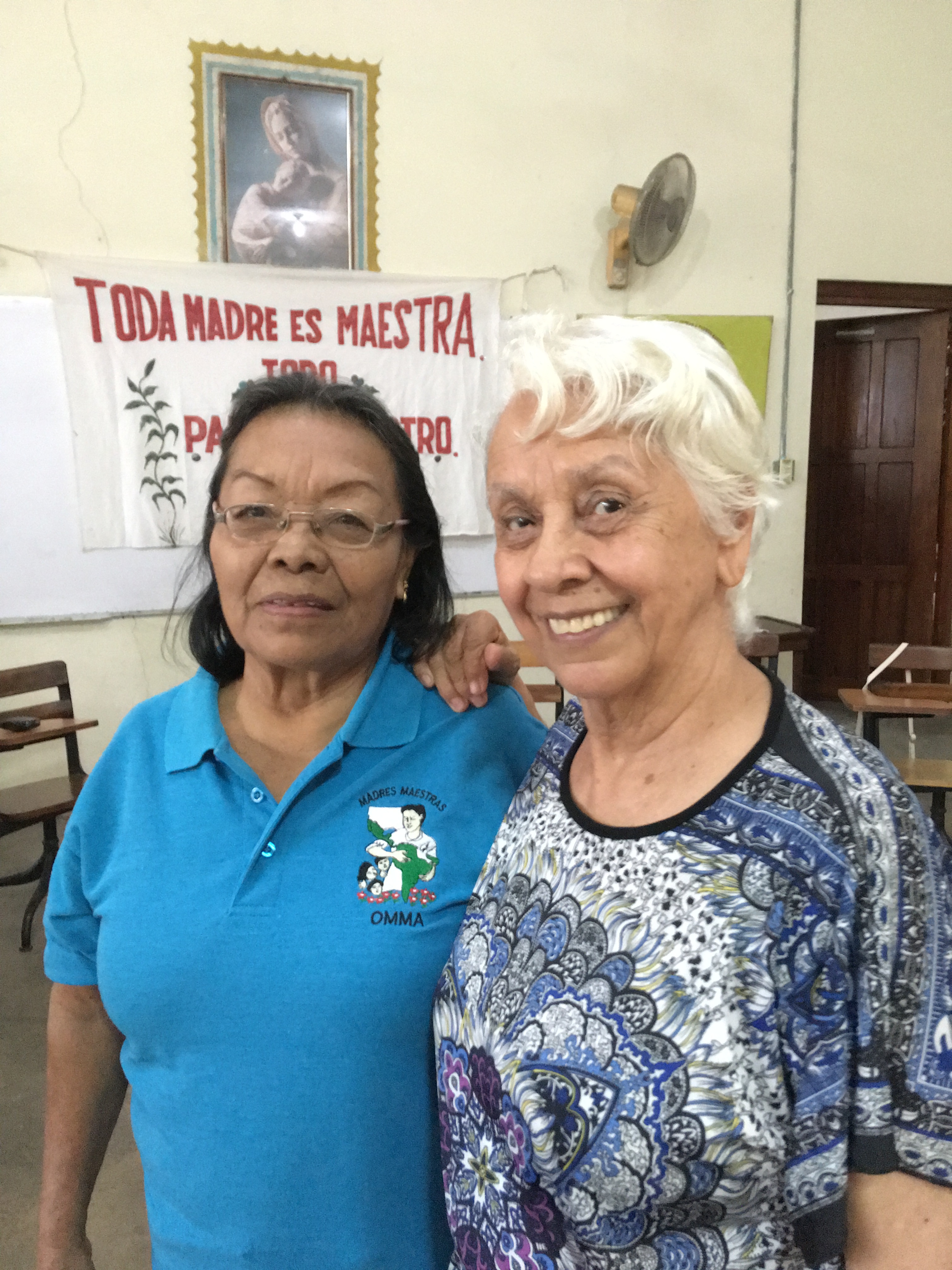
On the outskirts of the city of Panama I found Flor Eugenia, a slight woman with white hair who took the time to welcome me and my fellow travellers to the community she founded in 1971. It is called Madres Maestras/Teachers Mothers. They care for children whose families have moved from rural areas. We met the children and their mothers. We did not meet their fathers, although there was some talk about what these strong women are doing to get the men involved. Their culture still lacks liberal practices. As a mother of two sons who can fix things around the house, garden, do the laundry, cook well, and care for children, I was struck by this disparity and would encounter it elsewhere in indigenous cultures.
It took years of dedication to keep this program going and make it work. In fact, it works so well the community school idea has spread across the country. Two visitors from the Philippines arrived while we were there. They are planning to open a Mothers Teachers school in their country. Weeks later, after I arrived home, I heard on the radio that local neighbourhoods want to create spaces where parents and children learn together. Touted as a progressive educational model, I thought this model will succeed if we can support and sustain it like the one I had visited.
After Panama our group continued to Costa Rica. We had the unique experience of crossing the border on foot with our luggage in tow leaving behind one bus and driver to board another. Awareness dawned. Millions cross borders on foot every day. They do not choose where to land. Unlike us, they are not tourists. Such privilege to be one or the other belongs to the likes of me and those of my fellow travellers who paid our way, a legitimate tour at a reasonable fare. Now on the bus I was full of memories of a Panama outside the familiar. Yes, I had visited the Panama Canal, Casio Viejo (Old Panama), and seen the new Panama of international riches including modern high rises and new bridges. Yet, what remained were the memories of warm ocean waves rolling into shore along a shallow stretch of a sandy beach in the province of Chiriqui and the brilliant expanse of stars positioned in a sky close to the equator. Companionship that brought warmth, sparks, laughter.
My reward for venturing off the beaten path came in the form of amazement on the south Pacific coast of Costa Rica. Where mostly locals visit sits the OSA Peninsula, home to the Bahia Ballena National Park, a vast protected marine and biological reserve. Now, I have travelled to the east coast of Canada and seen puffins and porpoises, to the west coast and seen eagles and whales, to the Galapagos and seen boobies and dolphins; but here, in Costa Rica, one boat excursion brought those sights and more. Breaching humpbacks so close we could reach out and almost touch them, colonies of birds across the water from howling monkeys, and a tidal formation in the shape of a whale’s fin, a fluke. Total amazement!
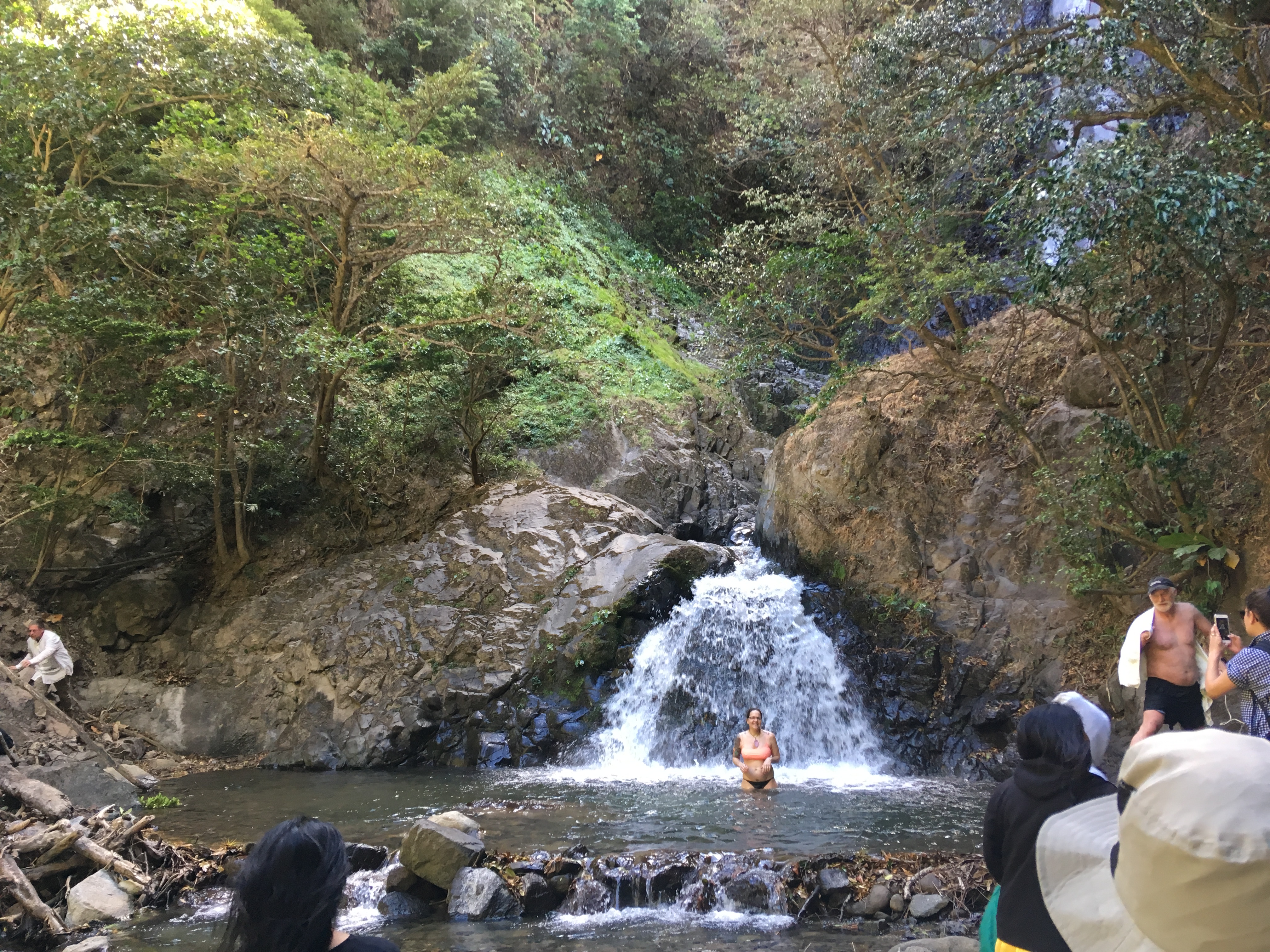 Costa Rica is known for its waterfalls. Our group visited them in both Costa Rica and Panama. Despite the description of a challenging trail, I was determined to get to Ngöbe-Buglé, our first visit to a waterfall. I joined the young students and seasoned hikers. To top off the challenge it was a windy day. At one turn a fierce gust slammed me against a rock and pulled my sunglasses off my head. When I reached for them an indigenous guide raised his palm indicating for me to stop. He nimbly retrieved them. That’s when I realized I had a following. A long line of locals wearing only flip flops giggled. I was grateful, if a little embarrassed. They were looking out for me, an old lady in hiking shoes unused to the steep terrain, rocky ground and narrow path. The effort of getting there was worth the plunge into the cold basin below the veil of falling water. Trips to other waterfalls were easier and always rewarding.
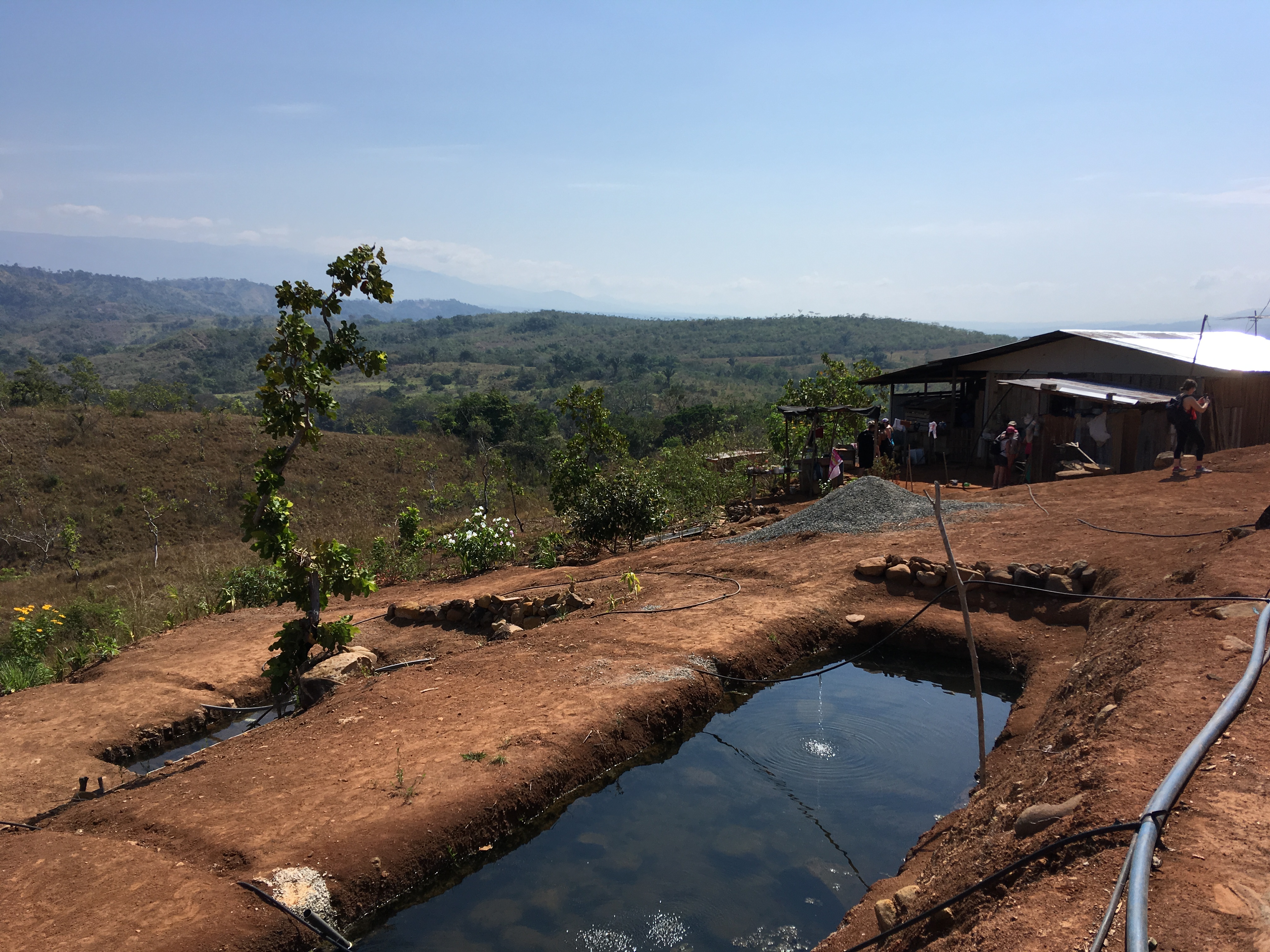 No surprise to learn that fish farms are catching on in Central America. Where I live there is a local trout farm that is gaining in popularity for being sustainable. The environmentally conscious consumer likes to eat at restaurants where these fish are served. In Costa Rica we visited a fish farm in Boruca which is an indigenous reserve. The family working this farm are basically squatters on their own land that was once occupied by non indigenous cattle farmers. The set up reminded me of many farm to table initiatives. Here water comes from a spring in the hills where there’s a waterfall. This irrigation system will also allow for building greenhouses and the establishment of vegetable patches in the future. So, goodbye cattle farmers. Hello sustainable production for local consumption. The main fish cultivated are tilapia and fresh water shrimp.
On our first day in the capitol city of San Jose I woke up early. Outside our hotel the street was busy with people heading off to work. I felt safe joining the throngs who were walking in sunshine. Only one block away I came across a plaza with installations that resembled the works of Henry Moore. Heidi, a mature student who was also with the tour, saw me and waved. We were both full of delight to find ourselves in this magical place where we discovered an extensive sculpture exhibit of Jiminez Deridia. All the bronze sculptures that lined the park had figures with spheres. Earlier on our trip we had been introduced to the phenomenon of stone spheres that litter the countryside in Costa Rica. There is much speculation about how they came to be. Were they carved by ancient people? Did they drop from the cosmos? Were they formed naturally? Later that day we would visit the national museum and see an exhibit in their central garden of varying sizes of stone spheres and an exhibit indoors on their origins. We would also witness more gigantic sculptures being erected outside the museum in Democracy Park. Before leaving the national site, we took a group photo in front of one of these impressive sculptures.
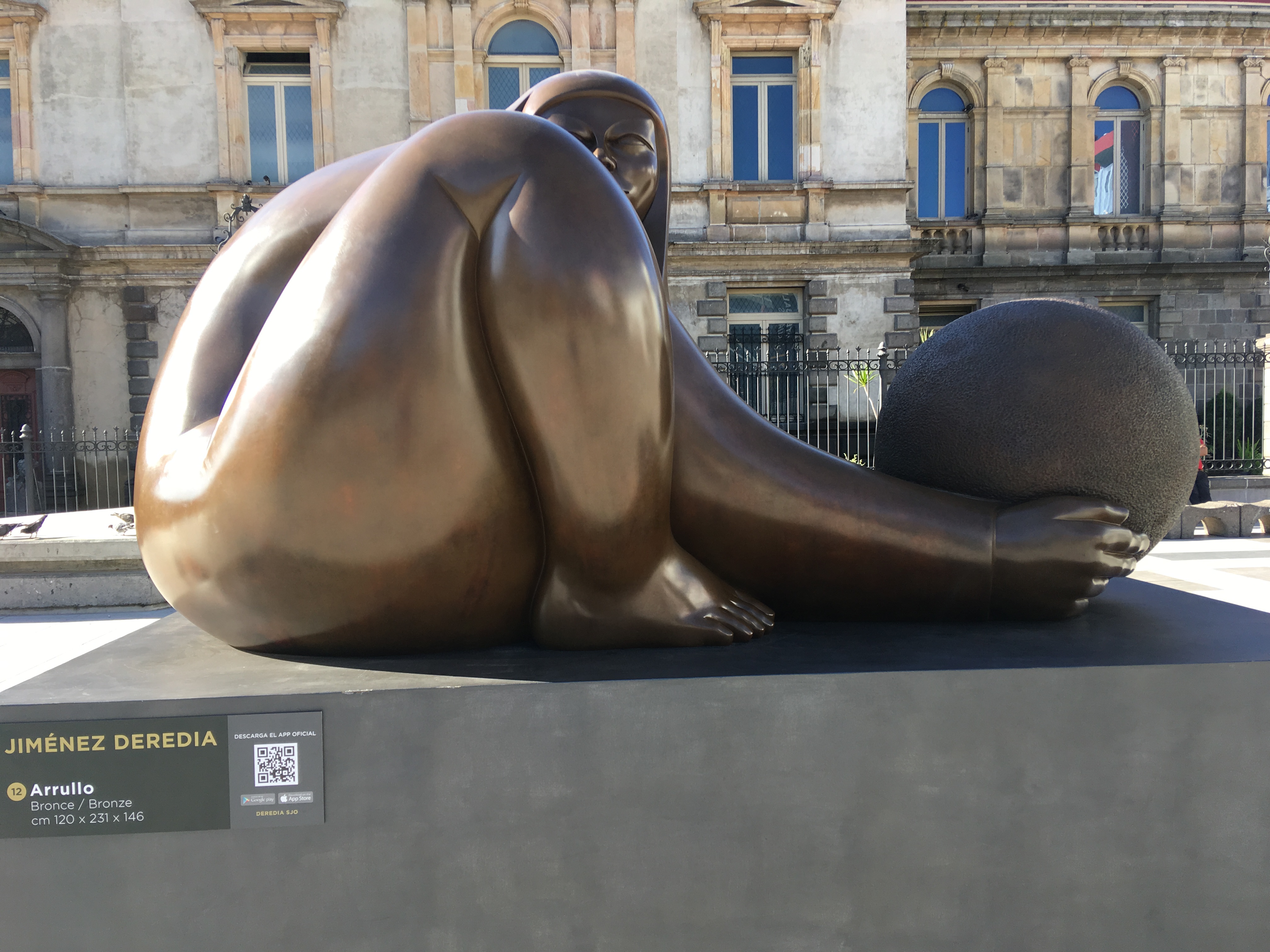 Early the next morning, our last before departing for the airport, I again left the hotel to take a walk. Outside our hotel I came across a work crew with more sculptures loaded onto a flatbed truck. They were busy installing another large piece. Here was the evidence of a country that values the art of its citizens. Such effort, such cost, such attention, by both the creator and the citizens. I wished I could have stayed longer to delve deeper into the phenomenal work by this native sculptor. Yet I was content to go home having achieved my goal. I took away the warmth of the people of Central America. I experienced rural and urban lifestyles. My muse inspired I wrote broadly: poems, blogs, this piece.
Travel
What is it about travel that inspires the muse? Is it simply being in a country away from the
familiar? Or is it seeing the familiar with different eyes?
Goethe said that the highest goal humans can achieve is amazement. Can travel achieve this? Why limit oneself to a singular experience or repeat the familiar without cultivating others? Why settle with simply being a tourist?
Nowadays travellers often go on adventures that pit themselves against the elements or to test their own limitations. I did what more and more travellers are doing. Last February I chose to experience the foreignness of an unfamiliar country by signing on to travel with a local NGO who organizes exposure trips to educate participants in the work it does.On the outskirts of the city of Panama I found Flor Eugenia, a slight woman with white hair who took the time to welcome me and my fellow travellers to the community she founded in 1971. It is called Madres Maestras/Teachers Mothers. They care for children whose families have moved from rural areas. We met the children and their mothers. We did not meet their fathers, although there was some talk about what these strong women are doing to get the men involved. Their culture still lacks liberal practices. As a mother of two sons who can fix things around the house, garden, do the laundry, cook well, and care for children, I was struck by this disparity and would encounter it elsewhere in indigenous cultures.
It took years of dedication to keep this program going and make it work. In fact, it works so well the community school idea has spread across the country. Two visitors from the Philippines arrived while we were there. They are planning to open a Mothers Teachers school in their country. Weeks later, after I arrived home, I heard on the radio that local neighbourhoods want to create spaces where parents and children learn together. Touted as a progressive educational model, I thought this model will succeed if we can support and sustain it like the one I had visited.
After Panama our group continued to Costa Rica. We had the unique experience of crossing the border on foot with our luggage in tow leaving behind one bus and driver to board another. Awareness dawned. Millions cross borders on foot every day. They do not choose where to land. Unlike us, they are not tourists. Such privilege to be one or the other belongs to the likes of me and those of my fellow travellers who paid our way, a legitimate tour at a reasonable fare. Now on the bus I was full of memories of a Panama outside the familiar. Yes, I had visited the Panama Canal, Casio Viejo (Old Panama), and seen the new Panama of international riches including modern high rises and new bridges. Yet, what remained were the memories of warm ocean waves rolling into shore along a shallow stretch of a sandy beach in the province of Chiriqui and the brilliant expanse of stars positioned in a sky close to the equator. Companionship that brought warmth, sparks, laughter.
My reward for venturing off the beaten path came in the form of amazement on the south Pacific coast of Costa Rica. Where mostly locals visit sits the OSA Peninsula, home to the Bahia Ballena National Park, a vast protected marine and biological reserve. Now, I have travelled to the east coast of Canada and seen puffins and porpoises, to the west coast and seen eagles and whales, to the Galapagos and seen boobies and dolphins; but here, in Costa Rica, one boat excursion brought those sights and more. Breaching humpbacks so close we could reach out and almost touch them, colonies of birds across the water from howling monkeys, and a tidal formation in the shape of a whale’s fin, a fluke. Total amazement!Costa Rica is known for its waterfalls. Our group visited them in both Costa Rica and Panama. Despite the description of a challenging trail, I was determined to get to Ngöbe-Buglé, our first visit to a waterfall. I joined the young students and seasoned hikers. To top off the challenge it was a windy day. At one turn a fierce gust slammed me against a rock and pulled my sunglasses off my head. When I reached for them an indigenous guide raised his palm indicating for me to stop. He nimbly retrieved them. That’s when I realized I had a following. A long line of locals wearing only flip flops giggled. I was grateful, if a little embarrassed. They were looking out for me, an old lady in hiking shoes unused to the steep terrain, rocky ground and narrow path. The effort of getting there was worth the plunge into the cold basin below the veil of falling water. Trips to other waterfalls were easier and always rewarding.No surprise to learn that fish farms are catching on in Central America. Where I live there is a local trout farm that is gaining in popularity for being sustainable. The environmentally conscious consumer likes to eat at restaurants where these fish are served. In Costa Rica we visited a fish farm in Boruca which is an indigenous reserve. The family working this farm are basically squatters on their own land that was once occupied by non indigenous cattle farmers. The set up reminded me of many farm to table initiatives. Here water comes from a spring in the hills where there’s a waterfall. This irrigation system will also allow for building greenhouses and the establishment of vegetable patches in the future. So, goodbye cattle farmers. Hello sustainable production for local consumption. The main fish cultivated are tilapia and fresh water shrimp.On our first day in the capitol city of San Jose I woke up early. Outside our hotel the street was busy with people heading off to work. I felt safe joining the throngs who were walking in sunshine. Only one block away I came across a plaza with installations that resembled the works of Henry Moore. Heidi, a mature student who was also with the tour, saw me and waved. We were both full of delight to find ourselves in this magical place where we discovered an extensive sculpture exhibit of Jiminez Deridia. All the bronze sculptures that lined the park had figures with spheres. Earlier on our trip we had been introduced to the phenomenon of stone spheres that litter the countryside in Costa Rica. There is much speculation about how they came to be. Were they carved by ancient people? Did they drop from the cosmos? Were they formed naturally? Later that day we would visit the national museum and see an exhibit in their central garden of varying sizes of stone spheres and an exhibit indoors on their origins. We would also witness more gigantic sculptures being erected outside the museum in Democracy Park. Before leaving the national site, we took a group photo in front of one of these impressive sculptures.
Early the next morning, our last before departing for the airport, I again left the hotel to take a walk. Outside our hotel I came across a work crew with more sculptures loaded onto a flatbed truck. They were busy installing another large piece. Here was the evidence of a country that values the art of its citizens. Such effort, such cost, such attention, by both the creator and the citizens. I wished I could have stayed longer to delve deeper into the phenomenal work by this native sculptor. Yet I was content to go home having achieved my goal. I took away the warmth of the people of Central America. I experienced rural and urban lifestyles. My muse inspired I wrote broadly: poems, blogs, this piece.
Lloyd Wootton
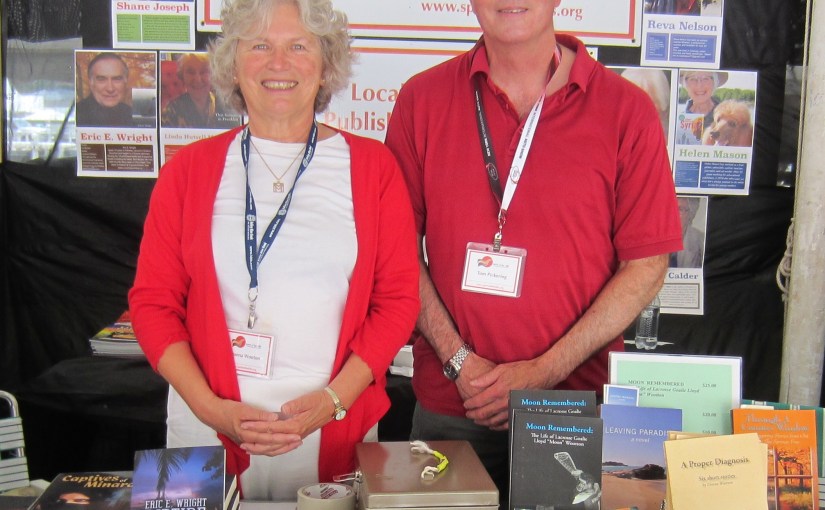
MOON REMEMBEREDThe Life of Lacrosse Goalie Lloyd “Moon” Wootton is the title of the book written by daughter Donna Wootton. Playing for Owen Sound and then Peterborough, Lloyd Wootton was instrumental in winning the prestigious Mann Cup five years in a row. Born in Hanover, Ontario, Donna moved with her family to Owen Sound where her father was born and raised. Then they moved to Peterborough before finally settling in Port Hope after “Moon” finished playing lacrosse. The book is pictured here at the writers booth at the Cobourg Waterfront Festival celebrating Canada’s 150.
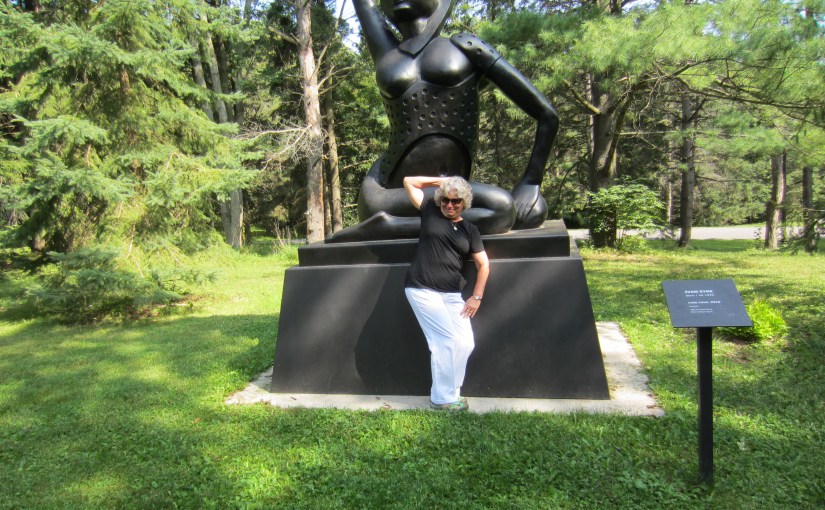
Lady Love in the Sculpture Garden at the McMichael Gallery inspired me to take this pose BUT is the shoulder of my raised arm down? NO! I must do better than this. It is important to keep the shoulders down when raising the arms. I have learned this while doing exercises in MMM. I suggest you try the pose and see if you can keep your shoulders down as nicely Lady Love’s.
Dance Language
Through the language of dance we can interpret a musical piece giving it a dynamic voice.
The body is a series of dynamic chains, not a set of segmented pieces. A body trained in movement interprets the parts of the musical piece – notes, melody, rhythm – to create a dynamic whole. What the dancer feels is the mood.
Whether trained as a professional or an amateur in movement a dancer uses the body like a writer uses language – filling the space, balancing the parts, repeating the elements – to communicate.
The dynamic chain, whether movement or words, feeds the imagination to create the whole. The process of following the dynamic chain is essential to any creator.
Breathing
Breathing is the key. Key to what? Key to good health in the body and mind. Why? Breathing gives life through oxygen. Is this obvious? It should be, but we still need reminders. Not everyone breaths the same air or in the same way.
When my husband and I recently travelled to Iceland we noted how well we felt by the second day of being there. Iceland has no pollution. The air is clean and fresh. It was noteworthy how good we felt from just breathing good air.
Breathing is exaggerated in Hatha yoga. Practitioners purposefully inhale in a controlled fashion to bring oxygen into all parts of the lungs and internal organs. The exhalation is just as important. Toxins are removed.
I first took yoga classes in 1970 and learned life-long benefits to controlled breathing. Then I attended MMM (Margaret Morris Method) classes and was impressed to learn that all the movements are done with awareness to breathing. In Margaret Morris’s time the east had a great influence. Many in the forefront of change like Raymond Duncan embraced the eastern philosophy of paying attention to breathing. In 1909 Margaret met Raymond who influenced her with this revolutionary thinking.
All Basic Exercises in MMM are set to music and specify how to breath. The same approach is given to every exercise throughout the colour levels. I am currently studying Mauve and the first exercise begins, “Expiration 3 beats,” followed by, “Inspiration 3 beats.” In other words, take up the starting position and breath in before the music begins. A good approach to each lesson. I can still hear my teacher in class every Wednesday night at the Swansea Centre in Toronto saying mid-exercise, “Are you breathing?”
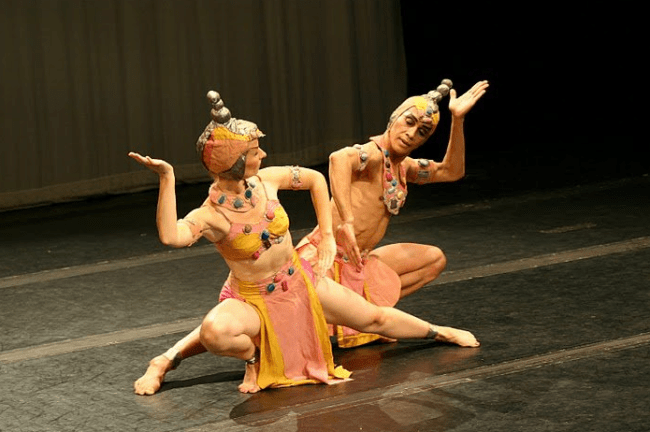
Diversity, Dedication and Discipline
Three d’s: diversity, dedication and discipline, can describe the commitment and practice I and others have experienced with an international dance movement. It is over a 100 years old. Although not well known in popular circles it is recognized as an influential amateur dance group MMM(Margaret Morris Movement. I have been practicing it for most of my adult life. While living in Toronto raising a family and working outside the home, I attended a minimum of one 2 hour class every week. Sometimes I was able to attend more than one class. When offered I might attend a full weekend of classes, and on a few occasions, an entire week. That takes dedication and discipline. Learning built on a foundation of movements designed to strengthen, stretch and mobilize the muscles and joints led me to an understanding of myself that I continue to build upon in other exercise regimens.
The diversity comes from the nature of the movement itself that developed over time to include a growing understanding of the body sciences like physiology and the expanding of the arts especially in dance. Diversity also comes from the people engaged in the practice of MMM. What could be more diverse than people from all over the world coming together to learn and practice a continuum of dance exercises.
 Donna Wootton